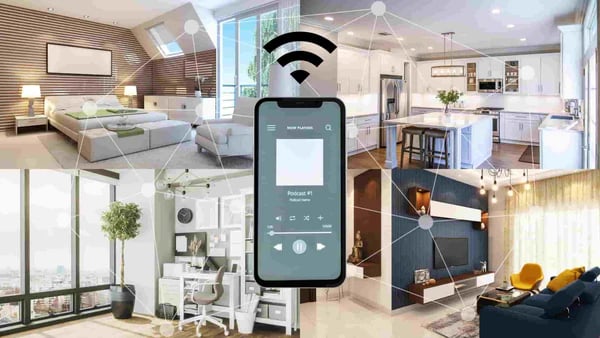
Smart home tech in 2026 puts practical, time-saving tools at your fingertips—smart lighting, AI-driven climate control, Matter-compatible hubs, advanced cameras, and health-monitoring devices all work together to make your life simpler and safer. You’ll find ten gadgets here that deliver real benefits: better security, lower energy use, easier control, richer entertainment, and smarter health tracking—no gimmicks, just clear upgrades you can use today.
This guide shows what to prioritize whether you want core upgrades for everyday convenience, advanced security hardware, comfort and automation that adapts to your habits, immersive entertainment, or devices that help monitor wellness. Expect concise picks, quick reasons to buy each item, and tips to make them work together so your home feels modern, efficient, and secure.
Core Smart Home Gadgets for 2026
These devices deliver the biggest day-to-day improvements: hands-free control, energy savings, and lighting that adapts to your routines and mood. Expect devices that prioritize privacy, Matter compatibility, and seamless voice or app control.
Smart Speakers
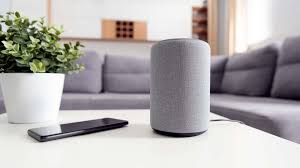
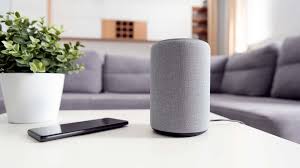
Smart speakers act as your home’s control hub for voice commands, music, and quick info. Choose a model with local processing for basic commands to keep sensitive requests on-device and reduce cloud dependency. Look for Matter support to ensure compatibility with new smart locks, lights, and thermostats across brands.
Sound quality matters if you use the speaker for music or video audio; midrange and bass performance differentiate budget models from premium units. Check built-in mic arrays and far-field voice recognition if you plan to control devices from across the room or while music plays. Battery or portable options add flexibility for patios and temporary setups.
Security features to prioritize include mute buttons, LED indicators for active listening, and clear privacy policies. If you use multiple rooms, consider stereo pairing and multiroom audio groups that work over your local network rather than routing every stream through the cloud.
An amazing recommendation for this category is the Amazon Echo Dot Max which is a versatile and strong smart speaker which can fulfil your needs. this product can be bought on AMAZON
Smart Thermostats
Smart thermostats cut your heating and cooling waste while keeping you comfortable. Pick a model with adaptive scheduling that learns your occupancy patterns, but always verify you can create manual schedules to override learning when needed. Integration with presence detection—via phone geofencing or smart home sensors—reduces false-away events.
Energy reports and HVAC runtime insights let you spot inefficiencies and make targeted changes. Ensure compatibility with your heating system (heat pump, multi-stage, or conventional) before purchasing; installers often supply compatibility tools. Remote control via a secure app and support for local voice assistants or Matter gives you redundant control options.
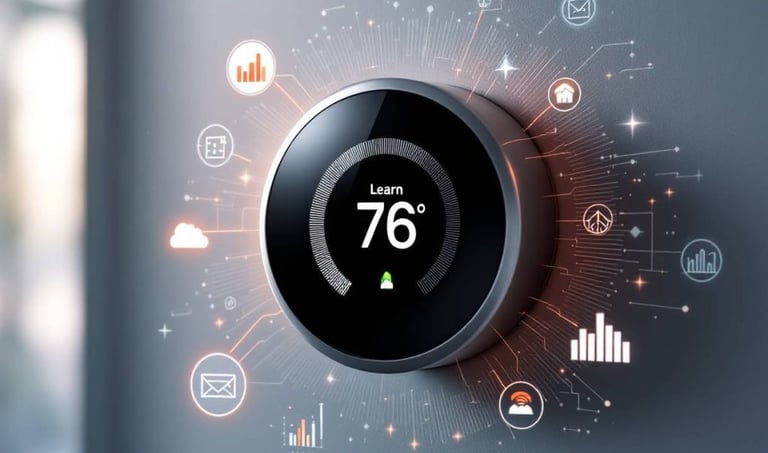
Look for thermostats that support temperature and humidity sensors in multiple rooms to avoid overheating single areas. Professional installation can optimize wiring options and ensure the equipment runs safely and efficiently. A good option that ticks all these boxes is the Google Nest Smart Programmable WIFI Thermostat.
Google Nest Smart Programmable Wifi Thermostat is a compact smart thermostat that lets you control your home heating and cooling from your phone or voice assistant (Google Assistant/Alexa). It learns your schedule, helps save energy by turning itself down when you’re away, and lets you set an efficient temperature programme easily via the Google Home app. It’s a simple way to make your home comfier and more energy-efficient.
You can find one the with around 20 % off here on AMAZON.
Intelligent Lighting Systems
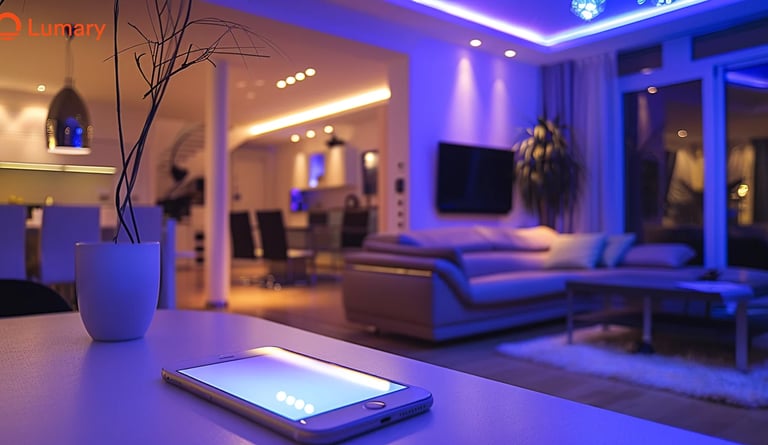
Intelligent lighting moves beyond simple on/off to scene setting, circadian tuning, and energy savings. Choose bulbs or fixtures that support both warm-to-cool white tuning and full RGB where you want color scenes. Matter-compatible bulbs let you mix brands in a single app or bridge, reducing vendor lock-in.
Assess control methods: local switches with smart re-wiring preserve physical control, while smart switches let you keep existing bulbs. Dimmers should be LED-compatible to avoid flicker. Plan for zones—group lights by room, task, or scene—to create one-touch modes like “movie,” “dinner,” or “away.”
Automation rules tied to sunrise/sunset, motion sensors, or presence make lighting feel effortless. Prioritize bulbs with long rated lifespans and replaceable drivers in fixtures to reduce maintenance and waste.
A good start to your smart home life would be the GOVEE floor lamp 2 which bring effortless and ambience in the same product. This product can be found through here on AMAZON
Advanced Home Security Devices
These devices focus on real-time detection and clear evidence capture. Expect devices that prioritize accurate alerts, encrypted storage, and easy integration with your existing smart home ecosystem.
Video Doorbells
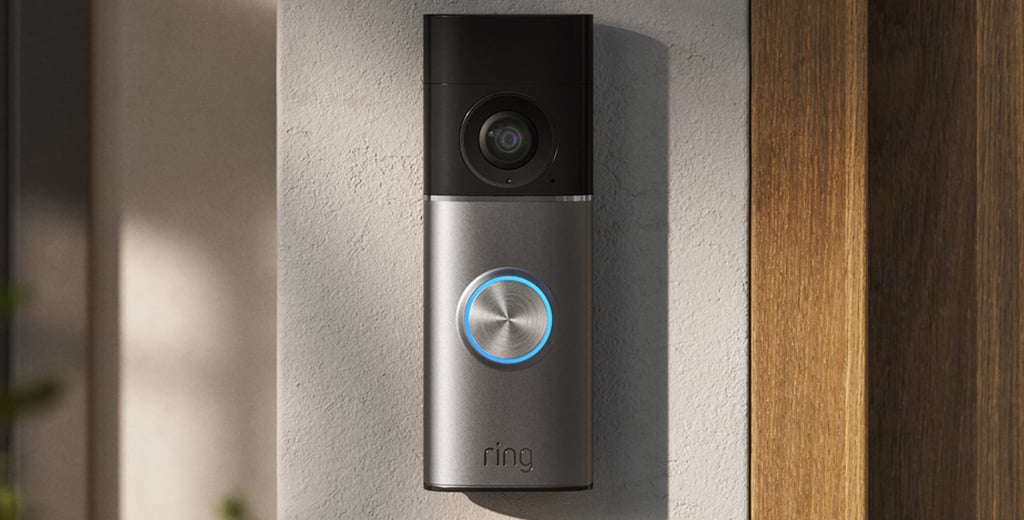
Video doorbells record visitors and deliver live video to your phone with two-way audio for instant interaction. Look for models with 1080p or higher resolution, HDR for backlit scenes, and a 30–180° field of view so you can clearly see packages on the stoop and faces at the threshold.
Motion zones and customizable detection reduce false alerts from passing cars or trees. Prioritize doorbells that offer local storage plus encrypted cloud backup, so you retain footage if the device is tampered with. Battery models simplify installation, but hardwired units provide continuous power and consistent connectivity.
Integration matters: choose a doorbell that works with your voice assistant, smart locks, and security system so you can grant access or trigger lights from the same app. Check subscription terms for event history and advanced features before you buy.
A good recommendation for this front is the Eufy Video Doorbell Camera which can be found in Amazon here
AI-Powered Security Cameras
AI cameras automatically classify people, vehicles, animals, and package deliveries to cut down on useless notifications. You get targeted alerts only when the camera detects the objects you care about, saving time and battery or bandwidth if you’re on a cellular link.
Key specs include 2K–4K resolution for readable license plates, night-vision quality (infrared or colour low-light modes), and at least 30 fps for clearer motion capture. Edge-processing models run inference on-device to preserve privacy and reduce cloud costs; cloud-based options often provide more advanced analytics and continuous recording.
Secure the camera with end-to-end encryption and regular firmware updates. Also evaluate power (battery, PoE, or wired), mounting flexibility for proper sightlines, and whether the vendor supports exports of original video for evidence.
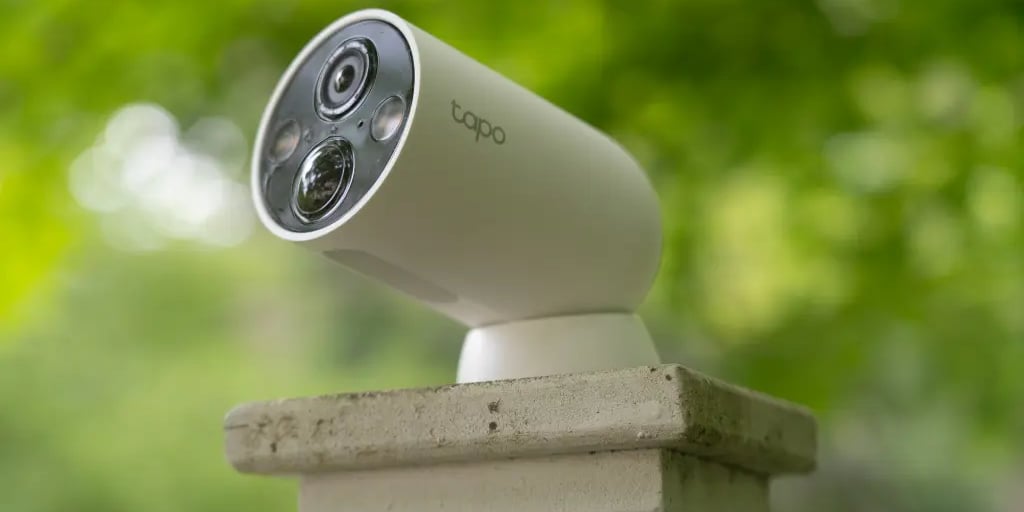
Because of difficulty of finding the best budget camera. Both of these cameras can be picked as a solid choice. The Ring Spotlight Cam with 30 days of free trial on the ring home subscription which can be found on amazon here. the second is a cheaper and less known but in no ways a bad camera. This is the Tapo 2K Rechargeable Battery Camera which is even seen as a best seller on amazon right now. this has no subscription and is easy to use. this product can be found on Amazon here
Next-Generation Comfort and Convenience
You can cut energy waste and simplify daily tasks with small, affordable devices that integrate into voice assistants and routines. Focus on reliable schedules, energy monitoring, and privacy controls when choosing products.
Smart Plugs and Outlets
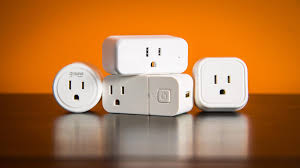
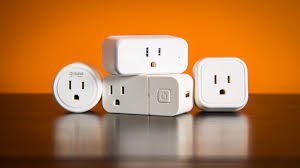
Smart plugs and Wi‑Fi outlets let you control lamps, fans, and slow‑cookers from your phone or voice assistant. Choose models that support power monitoring so you can see real‑time consumption and identify high‑use devices.
Look for compact designs that don’t block the second outlet and for UL/CE safety certification. If you rely on automation, pick plugs compatible with your ecosystem (Matter, HomeKit, Alexa, Google) to avoid duplicate hubs.
Key features to compare:
Energy metering and historical usage charts.
Local control or offline fallback to maintain basic on/off if the cloud is down.
Scheduling, away mode, and scene integration with other devices.
Load limits (amps/watts) clearly listed for safe use with heaters or pumps.
Install one on a frequently used device first to test response times and automation reliability before expanding across the house.
You can find a Good sturdy, high powered smart plug on here on AMAZON
Automated Window Shades
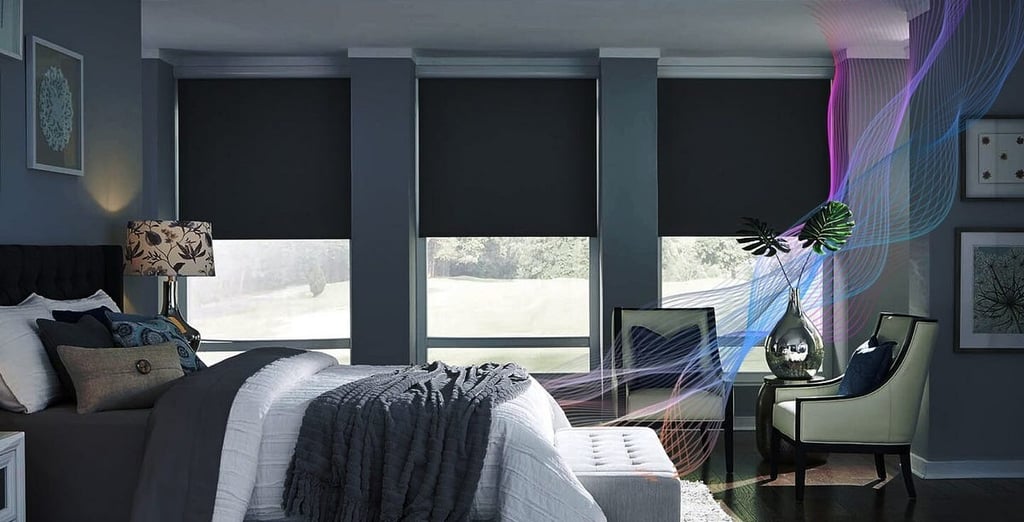
Automated shades give you programmable light control and improved insulation without manual operation. Choose motor types (tubular motors for roll/solar shades, track motors for drapery) based on your existing window treatments and noise tolerance.
Prioritize shades that work with your hub or Matter for unified scenes—morning routines can raise east‑facing shades while cooling mode lowers south‑facing ones. there is also very budget friendly ways to purchase one of these ease of mind tech gadgets.
Important considerations:
Battery vs. wired power: batteries simplify retrofit installs; wired eliminates battery maintenance.
Position and brightness presets and motion or ambient‑light triggers.
Fabric options for privacy, light diffusion, and R‑value (thermal performance).
Safety certifications for homes with children (cordless designs).
Measure windows accurately and verify motor torque ratings to ensure smooth operation for large or heavy panels.
A great start to a easier home life is the AOSKY Cordless Roller Shades on AMAZON
Cutting-Edge Entertainment Technology
Expect sharper picture, lower latency, broader format support, and sound that fills rooms without clutter. Choose devices that support HDR10+, Dolby Vision, Dolby Atmos, and Matter for seamless control and futureproofing.
Smart TVs and Streaming Devices
Pick a TV with at least 4K resolution, HDR support (Dolby Vision or HDR10+), and a high refresh rate (120 Hz) if you watch sports or play consoles. Look for HDMI 2.1 ports to enable features like VRR and ALLM with current-gen game consoles.
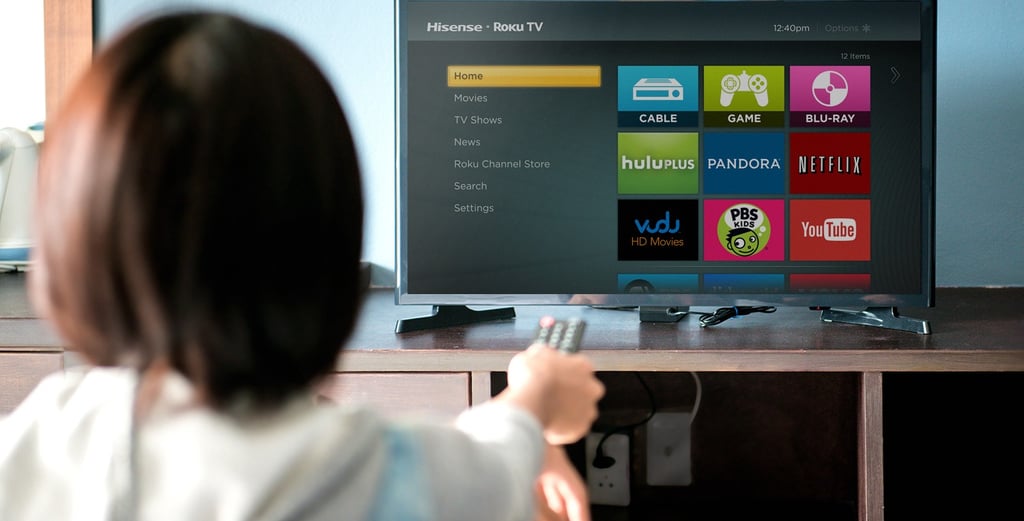
Smart TV platforms vary: choose one with a responsive UI, regular security updates, and app availability for major streaming services. If you prefer a lightweight option, a dedicated streaming device (Roku, Apple TV 4K, Fire TV, Chromecast with Google TV) often delivers faster updates and broader codec support than some TV OSes.
Connectivity matters: gigabit Ethernet or Wi‑Fi 6E reduces buffering for 4K HDR streams. Check for built‑in microphones only if you want voice control; otherwise use a remote that supports TV-specific shortcuts and volume passthrough. Finally, prioritize TVs that support calibrated picture modes or allow ISF/Filmmaker settings for accurate color and motion.
An amazing recommendation for this category is the Google TV Streamer as it streams in 4K and has various platforms. its almost always on sale and can be found here: https://amzn.to/4rzz7Di
Multi-Room Audio Systems
Decide whether you want wireless speakers that prioritize convenience (Wi‑Fi/Bluetooth) or a wired setup for critical listening. Look for systems that support spatial audio formats like Dolby Atmos or Apple Spatial Audio for immersive playback.
Choose speakers that work with your ecosystem—AirPlay 2, Chromecast, or proprietary systems—so you can group rooms, sync playback, and hand off audio between devices without dropouts.
Evaluate streaming codecs and services supported (MQA, FLAC, Spotify Connect, TIDAL Connect) if you listen to high‑res music. Pay attention to room calibration features (automatic EQ, microphone-based tuning) that optimize sound for your furniture and layout. For voice control and automation, pick speakers compatible with Matter or your chosen smart assistant to integrate audio with lighting and TV actions.
You can find the WiiM Mini AirPlay 2 on sale for less than 100 dollars!: AMAZO